What is Menopause?
Menopause is a natural stage in a woman’s life. It usually happens between ages 45 and 55. During menopause, periods stop for at least 12 months. As a result, the body makes less estrogen, a key hormone. Many women notice changes like hot flashes, mood swings, or sleep problems. However, menopause also affects bone health. For this reason, understanding menopause and osteoporosis is important for every woman.
Understanding Osteoporosis
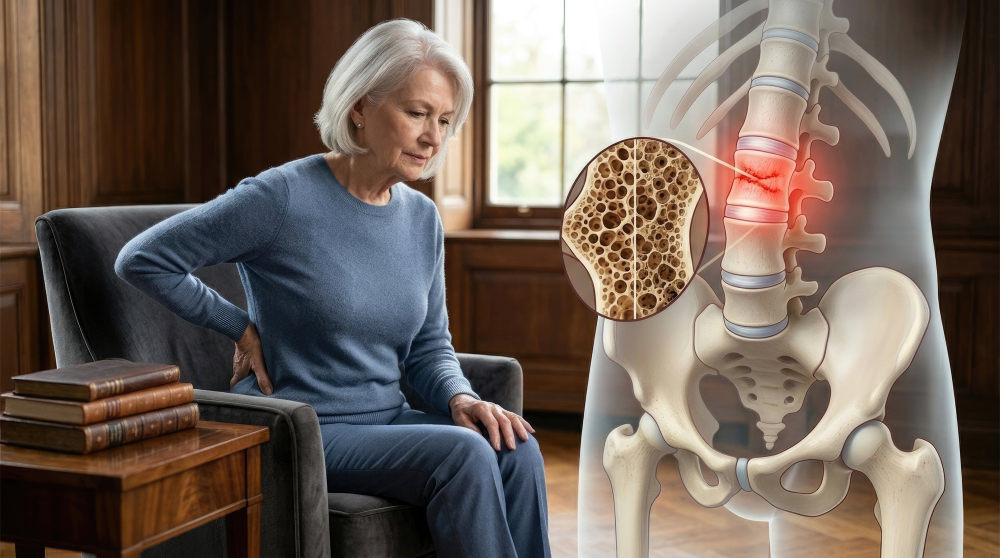
Osteoporosis is a condition where bones become weak and fragile. Because of this, bones break more easily. The World Health Organization (WHO) says osteoporosis is common in older adults, especially women. After menopause, the risk of osteoporosis rises. Bone health after menopause needs extra care to prevent fractures and other problems.
How Menopause Increases Osteoporosis Risk
Estrogen helps keep bones strong. When menopause starts, estrogen levels drop. As a result, bones lose calcium and other minerals faster. This loss makes bones thinner and weaker. Therefore, menopause and osteoporosis are closely linked. Women who go through menopause early or have family members with osteoporosis face higher risk. Other osteoporosis risk factors include smoking, low body weight, and not getting enough calcium or vitamin D.
Common Symptoms and Warning Signs
Often, osteoporosis does not cause symptoms at first. However, as bones weaken, some signs may appear. For example, you might notice:
Because these signs can be subtle, it is important to watch for changes, especially after menopause.
Diagnosis and Screening Methods
Doctors use special tests to check bone health after menopause. A common test is the bone density scan, also called a DEXA scan. This scan measures how strong your bones are. In many places, women over 65 or those with risk factors should get screened. Early diagnosis helps prevent serious bone problems. Your doctor may also ask about your family history and lifestyle habits.
Treatment Options
Treating osteoporosis often involves several steps. For instance, doctors may suggest:
In some cases, hormone therapy may help. However, treatment depends on your age, health, and risk level. Always talk with your healthcare provider before starting any new treatment.
Lifestyle Tips for Bone Health
Even after menopause, you can take steps to protect your bones. For example, try these tips:
Because small changes add up, making healthy choices every day can lower your risk.
Prevention Strategies
Preventing osteoporosis during and after menopause is possible. First, know your risk factors. Next, get regular check-ups and bone density tests if your doctor recommends them. In addition, follow a balanced diet and stay active. Some women may need medications or supplements. By taking these steps, you can help keep your bones strong for years to come, Consult Dr. Hiran Reddy.